


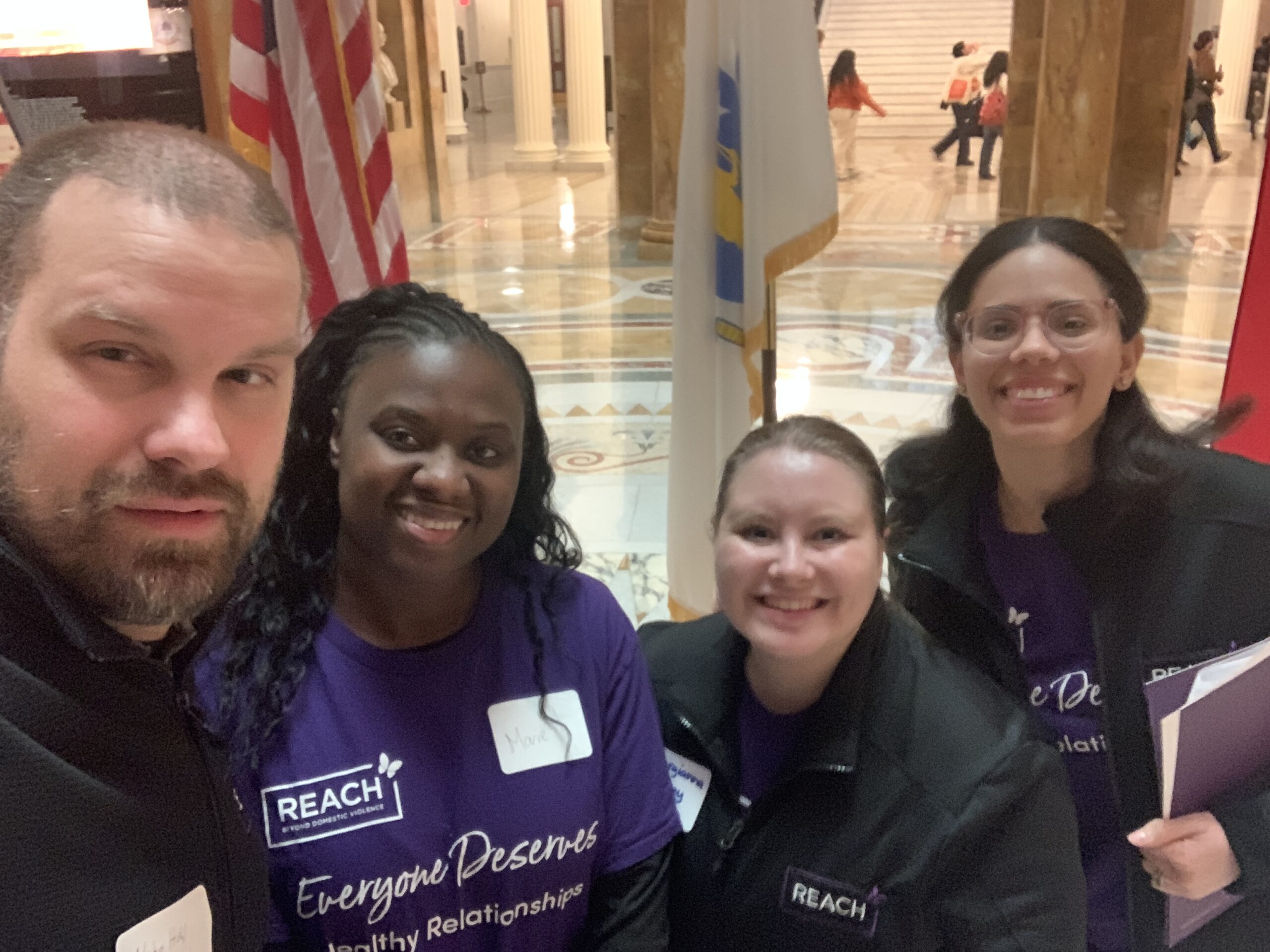
On Monday, March 16, a group of REACH staff showed up at the Massachusetts State House to join other participating organizations for Advocacy Day 2026.
Advocacy Day is an annual event led by the Massachusetts Coalition Against Sexual Assault and Domestic Violence, also known as Jane Doe Inc. The purpose of the event, as described by JDI, is to ‘come together as advocates, survivors, legislators, and community members to support vital legislation that gets us closer to a safer, healthier, and freer Massachusetts.’ Advocates who attend the event have the opportunity to meet with state legislators and discuss why the bills on their agenda are so vital for survivors.
The Power of Coming Together
Advocacy Day 2026 began, as it also began in previous years, with an empowering speaking program moderated by members of JDI’s leadership team.
Attendees heard from local senators and legislators, such as Senator Robyn Kennedy of the 1st Worcester District, former Massachusetts State Legislator Paul White, and Judiciary Committee Chair Representative Michael Day. The reps and senators in attendance all spoke passionately about the importance of the survivor-centric work being done by the advocates in the audience. Representative Day even recounted how far the survivor-centric movement has come since his days as an attorney, when knowledge gaps in the legal system would result in judges and lawyers inadvertently harming the survivors they were supposed to be helping.
Day emphasized that it was the exact sort of work that happens during Advocacy Day which has led to meaningful change and improvement in how Massachusetts laws handle survivors of domestic and sexual violence. However, Day and the other representatives also emphasized that there’s more work to be done. This point was echoed by fellow speakers from HarborCOV, Families for Justice as Healing, the Massachusetts Transgender Political Coalition, the Resilience Center of Franklin County, and the Massachusetts Law Reform Institute.
The organization speakers highlighted the specific pieces of legislation they were hoping to have passed into law, including:
- H.1466 - An Act Supporting Survivors Through Financial Assistance
- H.1594 - An Act Relative to Controlling and Abusive Litigation
- H.1694 - An Act Providing Civil Legal Remedies for Victims of Economic Abuse
- H.1587 – An Act Relative to Justice for Survivors
- H.3422 – An Act Establishing a Jail and Prison Construction Moratorium
- H.3384 – An Act Relative to Language Access and Inclusion
- H.656 – An Act Relative to Healthy Youth
- H.1588 – An Act Relative to Immigration Detention and Collaboration Agreements
(Descriptions for all of these legislative pieces are available here)
During the speaking program’s closing moments, JDI Executive Director Hema Sarang-Sieminski reiterated the power of togetherness, saying that advocates from so many different organizations coming together and seeing each other is the entire point of Advocacy Day. Those who are new to Advocacy Day may find the prospect of speaking with senators and state reps intimidating. However, as Sarang-Sieminski reiterated, the very spirit of Advocacy Day means that advocates, survivors, and anyone else who wants to champion the issues that matter to them needn’t do so alone.
Why Does State Funding Matter Now?
The current political climate is putting additional strain on an already strained system. Survivors hailing from marginalized groups and communities (such as Black and Latinx communities) are often disproportionately affected by intimate partner violence (also known as domestic violence) and sexual violence. This means that the need for survivor-centric services such as shelter, support groups, housing assistance, and legal advocacy has never been higher.
It’s imperative that state legislators understand the dire need for funding to support critical programs and resources that survivors across the commonwealth depend on. If passed, the legislation that REACH helped champion during Advocacy Day 2026 will introduce much-needed reforms for economic abuse, criminalization of survivors in abusive situations, translation services for state agencies, youth education on healthy relationships, and more.
REACH would like to thank the senators and representatives who agreed to meet with us:
- Senator Michael Barrett, who represents many of the cities and towns within REACH’s service area including Bedford, Carlisle, Concord, Lexington, Lincoln, Waltham (where REACH is based), and Weston
- Senator Cindy Friedman, who represents towns within REACH’s service area such as Arlington, Billerica, Burlington, Lexington, and Woburn
- Senator Rebecca Rausch, who represents the towns of Needham and Dedham (both of which are within REACH’s service area)
The Potential Impact on Survivor Stability
The legislation that REACH helped champion during Advocacy Day 2026 would have a direct impact on many of the social, legal, and economic issues survivors routinely encounter. These issues include (but aren’t limited to):
- Cuts to program funding provided through federal sources such as the Victims of Crime Act (VOCA). These cuts would drastically limit the resources and aid that organizations like REACH can provide to survivors, and would disproportionately affect culturally-specific programming for immigrant and LGBTQ+ communities.
- The misuse of the court systems by abusers looking to cause further harm (often referred to as ‘litigation abuse’). Protections are needed to ensure survivors aren’t constantly dragged into court and subjected to emotional and financial hardship by abusers with greater financial resources.
- A lack of housing and economic abuse protections. Economic abuse (i.e. when an abuser restricts access to funds and/or utilizes tactics such as coerced debt as a means of control) is something that affects a shockingly high number of survivors. When a survivor is saddled with debt, stolen wages, and negative credit scores, it can make already difficult tasks such as finding a job or securing permanent housing even harder. In many scenarios, survivors are often forced to stay with their abusers because they can’t afford to live on their own (especially if they have children to look after).
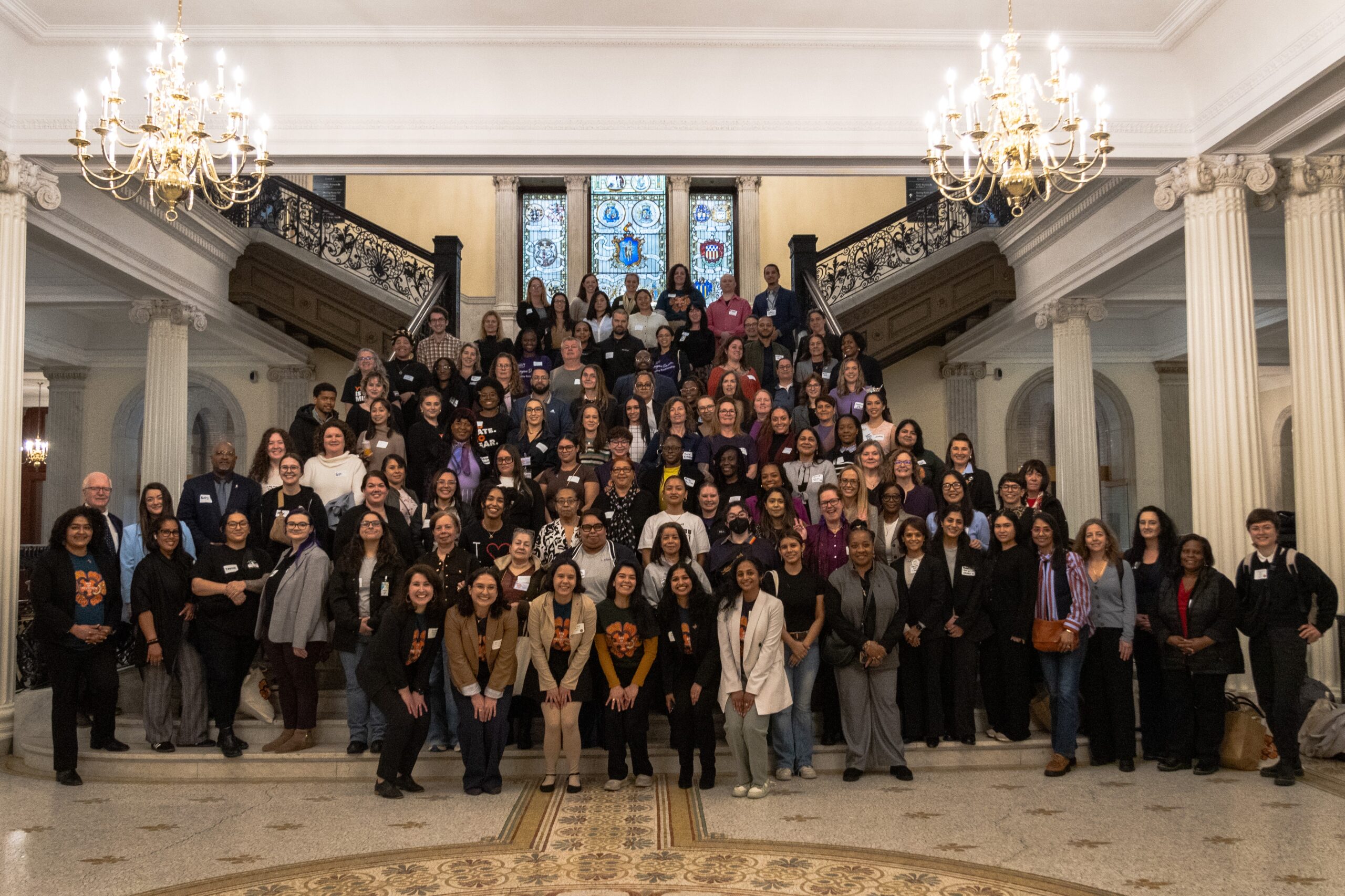
As both JDI and the state rep speakers emphasized, the work doesn’t stop once Advocacy Day is over. Advocacy Day represents a unique opportunity to bring critical survivor-facing legislation to the forefront, but it also represents the power of collective action. The REACH team is proud to have participated, and we’re grateful for the opportunity to come together and do our part in enacting positive change that will ultimately benefit the domestic violence survivors we serve.
*If you’d like to get involved and advocate for the survivor-centric legislation on JDI’s 2025-2026 agenda, the JDI Advocacy Day 2026 toolkit is a great place to get started. Many of the resources and materials shared in the toolkit are evergreen and can still be shared even though Advocacy Day 2026 is over.
