



*Trigger warning: this article contains discussions of harassment, stalking, and violence against women.
Men are afraid women will laugh at them.
Women are afraid men will kill them.
-Margaret Atwood
Contrary to what many well-meaning (yet misinformed) bystanders would have you believe, domestic violence is never an isolated issue, and it doesn’t just happen to “a certain kind of person.” It can happen to anyone, in any community, regardless of their gender, age, race, economic status, or social class.
Here at REACH, our prevention team shines a light on the underlying social conditions that enable domestic violence. Out of all the factors they find, there’s one that shows up with alarming frequency: the normalization of harmful misogynistic views towards women and how they should be treated.
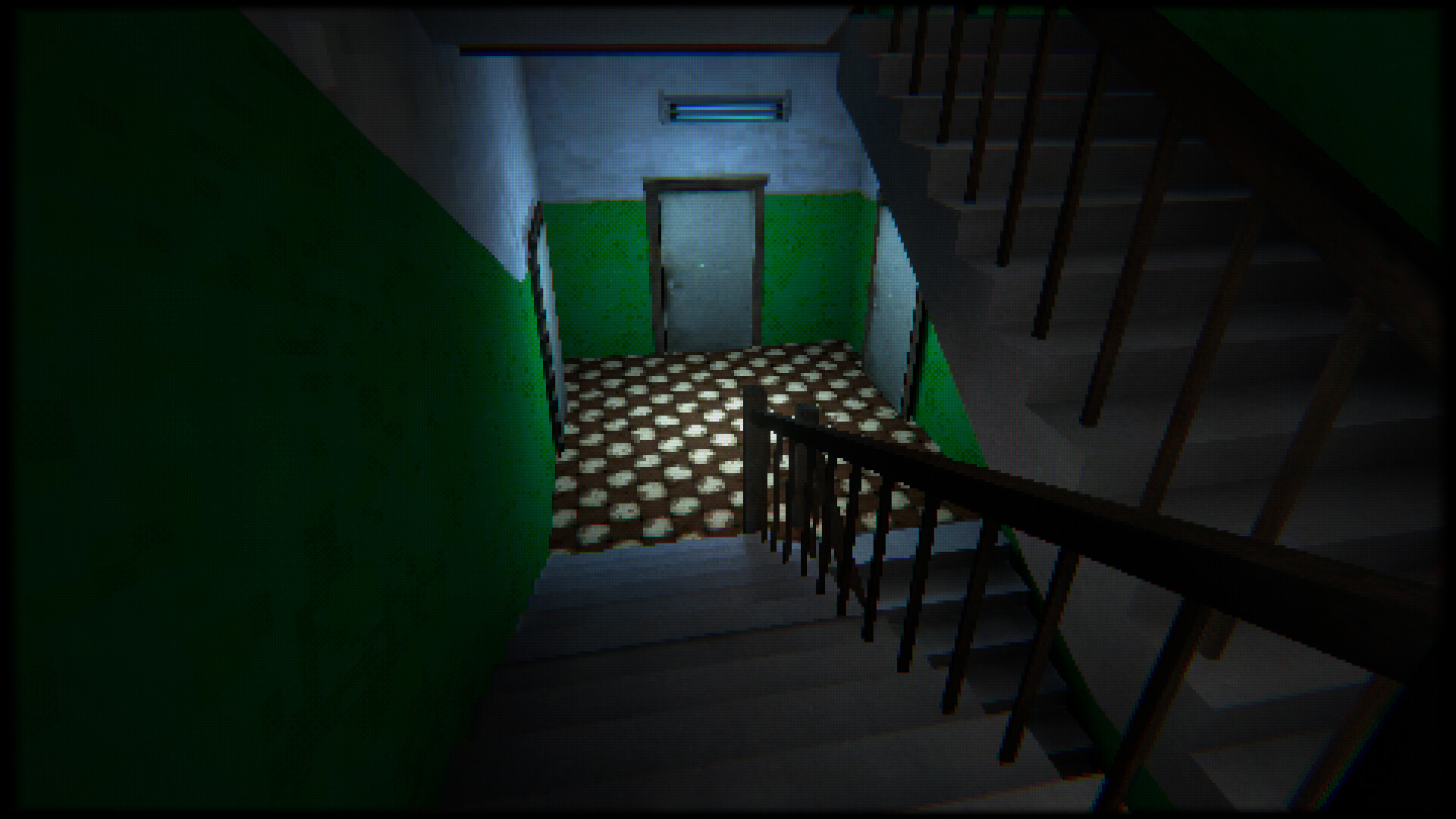
Most people are likely aware of these harmful norms and the ways in which they can manifest as very real fears for women, but they might not have much real-world exposure to contextualize that awareness. Arcadia Café, an indie video game from a small team of Ukrainian developers, brings those harmful norms front and center. Simply by playing the game, players must directly engage with the sexist, dismissive, and sometimes outright threatening behaviors that are routinely overlooked despite being a daily reality for many women.
This press release for Arcadia Café describes it as “domestic horror,” a phrase which I honestly don’t think I’ve ever seen used to describe a video game before. Considering that I work in the domestic violence field, I was admittedly intrigued (and perhaps a bit morbidly curious) to see how a video game would thread the needle of balancing escapism with harmful reality.
Having now played it myself, I can confirm that Arcadia Café doesn’t shy away from the harsh realities that many women and domestic violence survivors must live through every day. The game’s spooks and scares are obviously heightened to keep the player engaged, but the underlying messaging is still clear: unchecked misogyny can be a sinister force that keeps people trapped in harmful cycles of abuse even if they don’t realize it.
Horrors Within the Mundane
The press release that game developer and publisher Judas Brothers put out for Arcadia Café opens with a synopsis that most women will likely find uncomfortably relatable:
“For many people, a late-night walk home is routine. For countless women, it can feel like a calculated survival strategy: watching every shadow, listening for footsteps, checking who is behind them, and constantly looking for a safer route.”
The actual game is thankfully not quite as intense as the above passage makes it sound, but it absolutely emphasizes the fear of feeling powerless, vulnerable, and paranoid while navigating an unfamiliar environment.
Arcadia Café puts players in the role of a young woman named Alina living in early 2000’s Ukraine. Alina has just started a new job at the titular Arcadia Café, and over the course of a few days the player guides her on the short walk between her apartment and the café so she can work her evening shift.
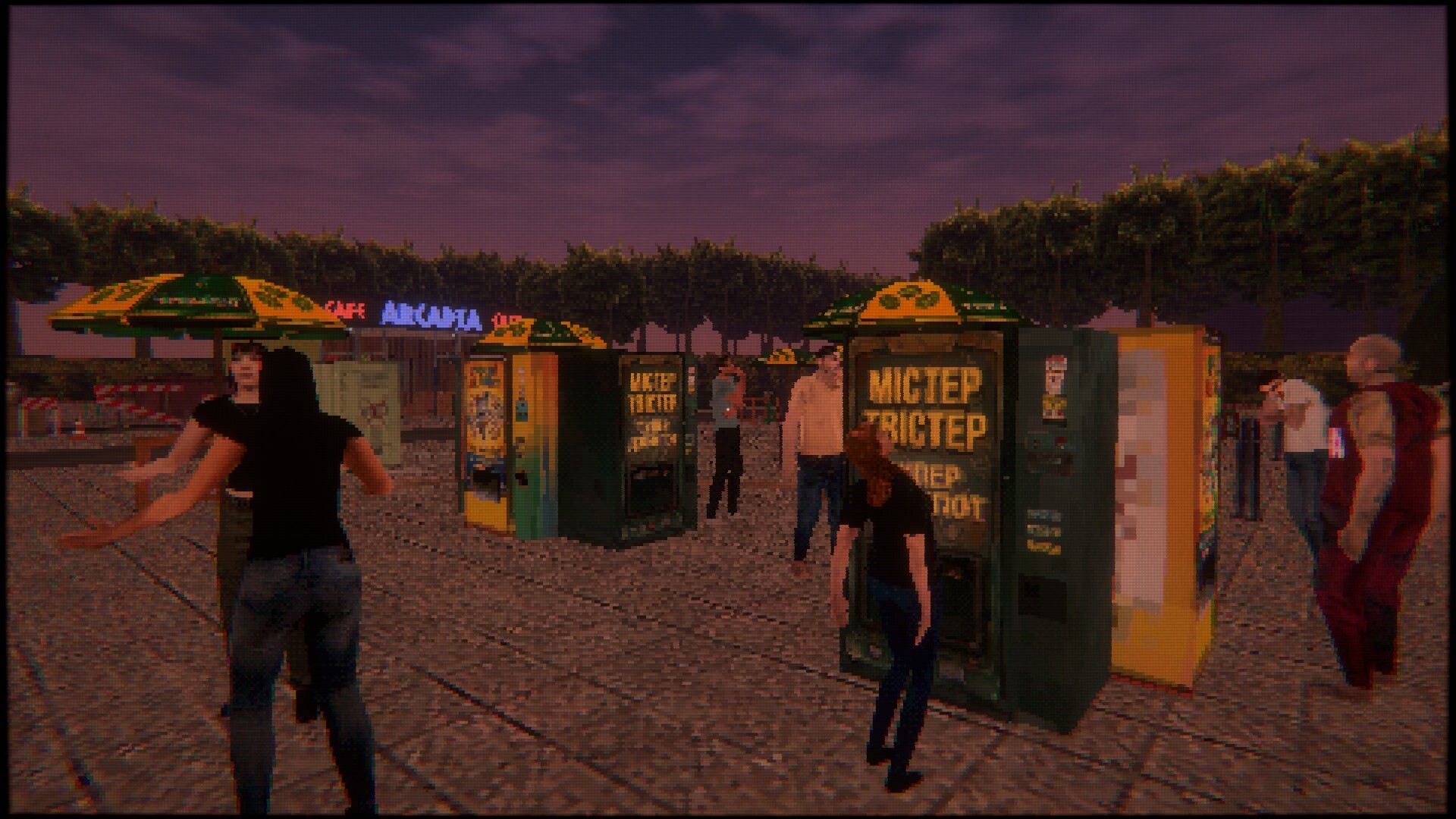
Utilizing a first-person perspective and a “retro VHS” aesthetic, Arcadia Café tells its story both through internal narration from Alina and from environmental details the player comes across on their evening walks to and from the café.
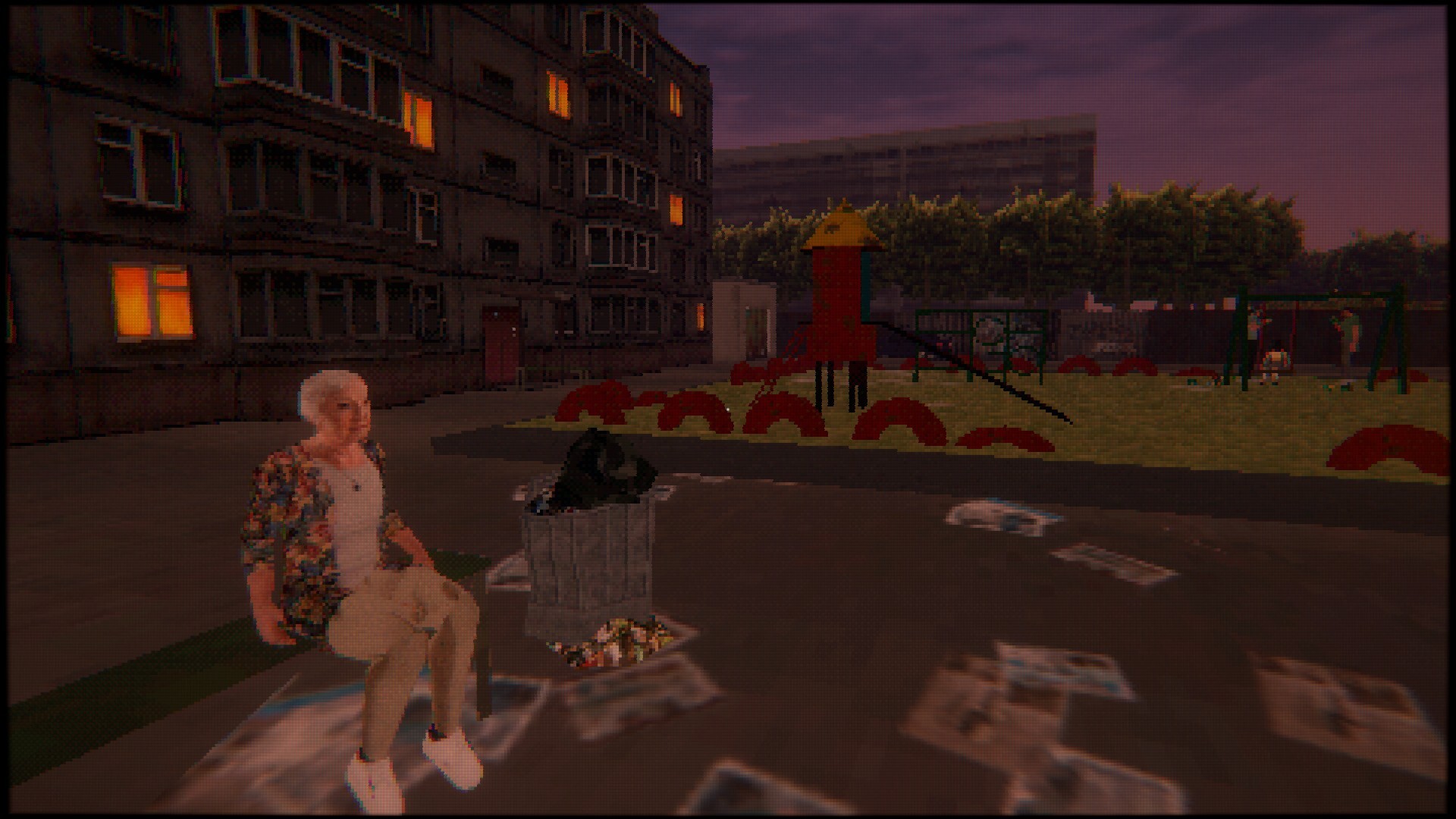
During the first of these walks, the player can see that Alina’s neighborhood is in the midst of an economic struggle, and that many of the residents are desperate and distrustful. These poor economic conditions mirror the very real economic crisis Ukraine went through back in the late 90’s and early 2000’s after the collapse of the Soviet Union.
Judas Brothers clearly had a specific vision in mind when they chose the setting and time period for Arcadia Café. While the early 2000’s economic crisis affected everyone living in Ukraine at the time, it disproportionally affected women as nationwide patriarchal sentiments allowed misogynistic practices, including rampant sexual abuse and cases of human trafficking, to fester amidst the post-collapse chaos.
During their first walk from Alina’s apartment to the café, the player comes across several instances of misogynistic behavior that’s either enabled by or at least conveniently ignored due to the neighborhood’s economic plight:
- An old woman right outside the apartment makes a snide comment about Alina under her breath, though she feigns politeness if the player tries to confront her. After the player returns from their first café work shift, the old woman is more overtly hostile, accusing Alina of being a sex worker simply because she got home late at night.
- A disinterested and negligent father is seen standing near his young daughter while she sits on a swing. The daughter is clearly distraught and wants to see her mother, but all the father is focused on is drinking and chatting with his friends.
- A lecherous “talent scout” is seen propositioning a young woman to model for him. The player is unable to intervene, and if they try to talk to the scout or the young woman, the only response the game provides is light giggling from the young woman (implying that she’ll later fall prey to his harmful intentions).
- Ambient chatter reveals that another local café was recently shut down after a young woman was found apparently murdered while working her shift.
- The poor economic conditions are being exploited by a large conglomerate which has set up outdoor slot machines that the local workers are gambling their paychecks away on. The neighborhood’s pharmacy has also been shut down, to the distress of a disgruntled and mentally unwell homeless man who can no longer get his meds.
These environmental details, combined with Arcadia Café’s use of retro low-poly graphics and drab, dark colors, come together to create a seemingly mundane world infused with an undercurrent of sleaze and sinister intent. The familiar environs of her neighborhood are places where one would assume Alina feels safe, but the game’s opening moments make it clear that this isn’t a very safe place even during the daytime.
When the player finally reaches the Arcadia Café, the light of the setting sun slowly fading behind them, what they saw during their first excursion through the neighborhood has already established a clear sense of unease and discomfort. Then their first shift at the Arcadia Café begins, and with it, an even greater sense that danger is lurking just around the corner.
The Monsters We Refuse to See
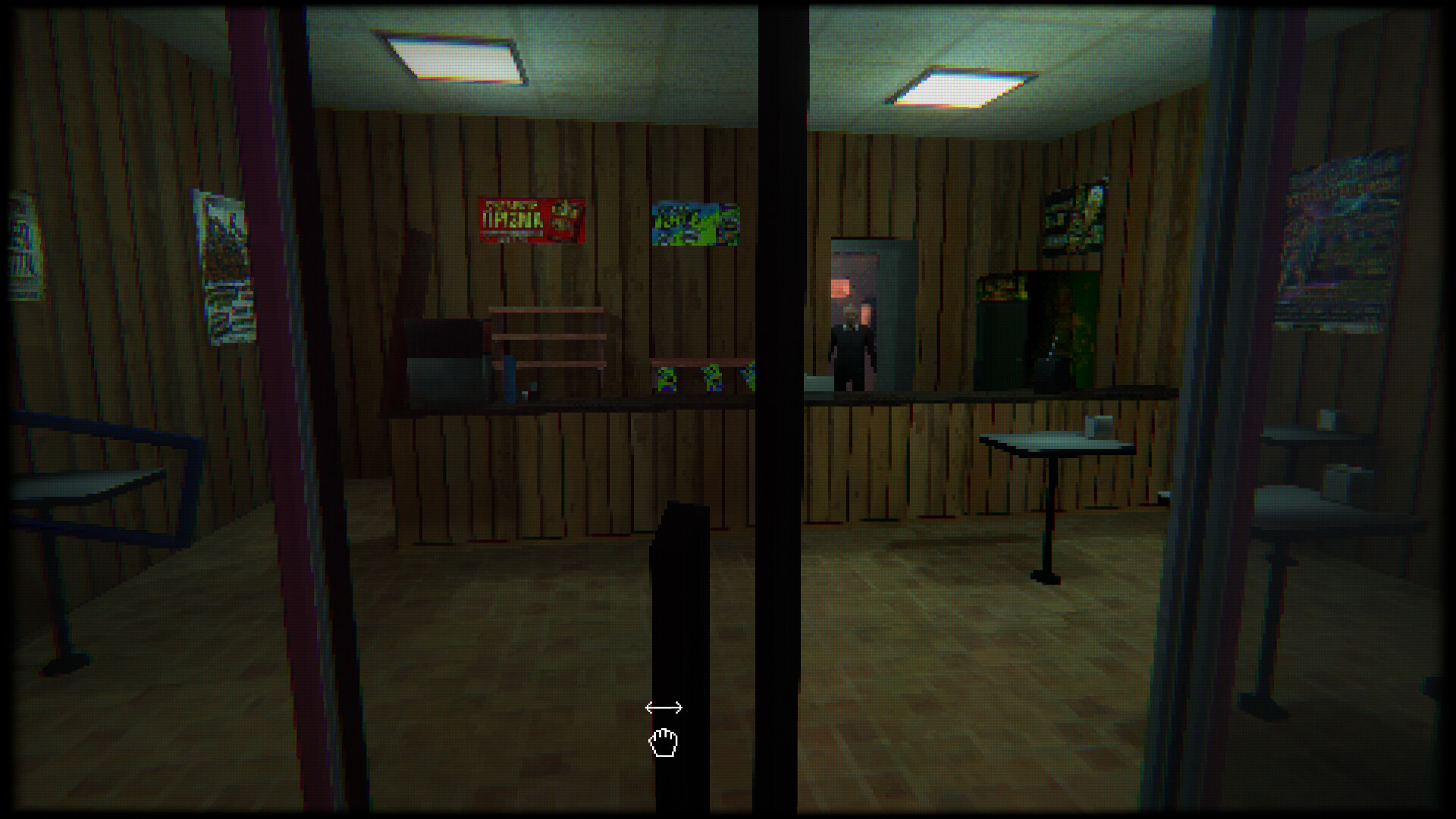
As Alina steps into the Arcadia Café, she’s greeted by the manager who immediately informs her he expects her to run the café by herself, and not to bother him while he’s sequestered in the back office. Alina understandably raises some concerns, but the manager just waves them off while dismissively calling her “honey.”
After a brief “tutorial” where the player performs the basic tasks of working the evening shift (turning the café sign on, stocking shelves, brewing coffee, etc.), they’re left on their own to serve the customers who come in. Customers will request certain items, and the player will fetch those items for them, taking the money they leave behind and putting it in the cash register.
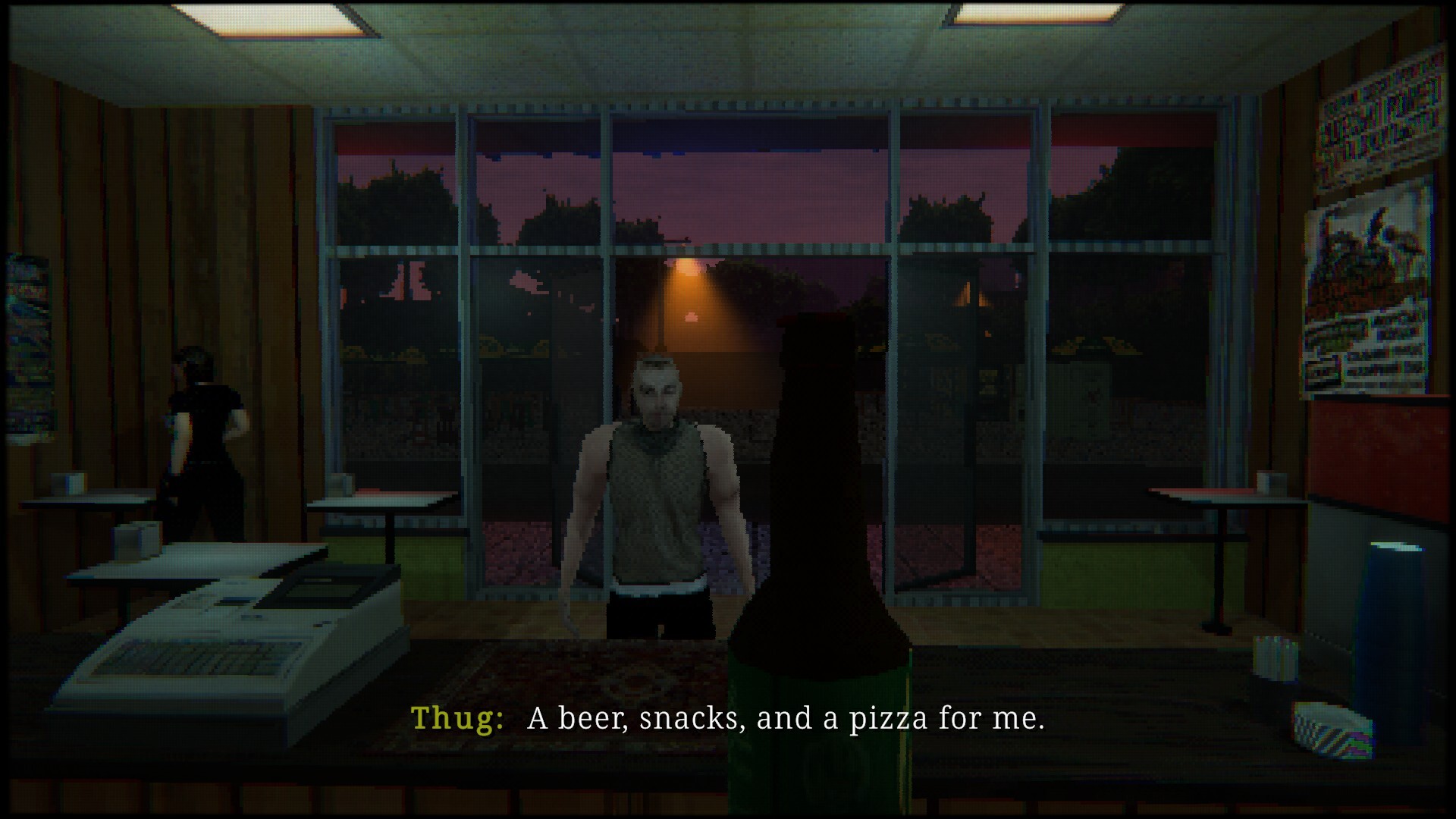
Of course, I say “request certain items,” but that’s being overly generous. Most customers are extremely rude towards Alina, practically barking what they want at her, and never saying thank you when they drop off their money. Many of the male customers leer at Alina, calling her “girl” or “babe,” and not seeming to care in the slightest how uncomfortable they’re making her.
One customer doesn’t even bother with using actual words. He just whistles at Alina and expects her to deduce which items he’s requesting based on the different pitches and cadences of his whistles (the game treats this as a sort of “puzzle” for the player to solve). Another customer, a beggar who Alina gives free snacks to, offers to wait outside for her until after her shift’s over so he can pay her back, not realizing his seemingly noble intentions sound anything but.
Throughout this entire experience, nobody ever calls out the rude customer behavior, everyone just accepts it as normal. The one customer who’s even remotely pleasant to Alina is another woman named Frenchie who claims Alina looks familiar to her and that she saw Alina on the news (apparently having mistaken Alina for the young woman who was murdered at the other café).
As the night progresses, Alina’s interactions with customers slowly shift from mildly unpleasant to downright bizarre. Customers will disappear when Alina turns her back to get the items they requested, or suddenly jump out from behind a doorway as she’s returning from the back storeroom area. These alarming interactions only add to the player’s (and Alina’s) existing sense of unease, like a pressure valve that slowly continues to tighten until the work shift finally ends and brings with it a welcome sense of relief.
Sadly, that relief is short-lived, because once Alina finishes locking up and steps away from the safety of the café’s lights, the darkened streets that await her promise a harrowing journey home.
Jumping at Shadows
Alina’s late-night journey back home is Arcadia Café at its most intense. As the player struggles to remember the same route they took during the daytime, they must strategically move between pools of light cast by the overhead streetlamps. Lingering too long in the darkness between streetlamps causes Alina to succumb to an unknown danger (the implication being that she was assaulted or abducted), which means the player must maintain a balance of moving quickly but also moving carefully.
As the player navigates this nighttime gauntlet, the game will deploy a few familiar horror movie tropes to keep them on their toes. One streetlamp will loudly spark and then wink out as the player approaches. A distant stranger will run across the player’s field of vision, the darkness of the night hiding their identity.
When Alina gets close to her apartment, she starts hearing the same whistling that she heard from the rude customer earlier. This leads to one of the game’s most nerve-wracking moments as the player must manually enter the door code to Alina’s apartment complex while the sounds of whistling behind them grow steadily louder. Again, the game uses this door code sequence to convincingly transform a seemingly routine activity into a terrifying experience; a situation that many women can likely relate to.
Frightening Realities
Arcadia Café isn’t a very long game, taking a bit over an hour to finish on average, but even with such a short runtime it still manages to say a lot. The encounters that Alina goes through across her different shifts working at the café touch on themes such as stalking, homelessness, sexual violence, and deteriorating mental health (again, subjects that were likely daily realities for many women living in early 2000’s Ukraine).
*Warning: the below passage mentions murder and also spoils Arcadia Café’s ending
Arcadia Café ends rather abruptly, with Alina seemingly being murdered while taking a bath in her apartment by a man who, earlier in the game, chased off a creep who was stalking Alina during her walk home. Some critics have expressed frustration over the sudden ending, but one could also argue that it represents how violence against women is often downplayed or ignored until it’s too late.
Personally, I didn’t mind the abrupt ending too much, though I did take issue with the implication that women are more often murdered in their homes by total strangers, when in reality the exact opposite is the case. Patriarchal ways of thinking may embolden some men to harass women who are total strangers to them, but it’s important to remember they also embolden abusers into harming or even killing their intimate partners.
I don’t want to be too nitpicky with Judas Brothers’ creative decisions or the ending they chose for their game since I still think their leveraging of “domestic horror” is rather effective. The fear of home invasion is hardly a foreign concept for most women (especially those who live alone), and it’s a popular trope within the medium of horror storytelling.
*Update – July 2026
In July of 2026, after the main body of this blog post was written, Judas Brothers released a surprise update for Arcadia Café which added in an extra playable chapter and provided a more definitive ending to the game’s story.
The new chapter reveals that Alina survived the attack in her apartment (apparently having been discovered bleeding but alive by the same creep her assailant chased off) and that she’s been taken to a nearby hospital.
However, the poor economic conditions combined with local government corruption mean that the hospital Alina’s been taken to feels more like a rundown prison than a proper medical facility. Even worse, Alina wakes up to discover that her assailant followed her to the hospital, meaning the player must guide her through a rudimentary stealth gameplay experience while her assailant hunts her.
Once the player manages to escape the hospital, a series of text captions provides a truncated and bittersweet epilogue:
- Alina manages to board a bus after escaping the hospital and eventually returns to her home village. She’s alive and safe, but the trauma of what she experienced leads her to abandon her aspirations of attending college and becoming a game developer.
- The man who assaulted Alina in her apartment was apparently the son of the local police chief. Both the epilogue captions and visual clues the player sees in the hospital imply that Alina was far from the first woman her assailant attacked, and that his father was helping to cover up his crimes.
When compared to the game’s original ending, this new ending does at least feel more like a proper resolution to the journey that Alina goes through (even if it does largely feel half-baked and cobbled together). Again, one could argue that Alina’s abandonment of her dreams signifies the lasting effects trauma can have (and the consequences of unchecked misogynistic violence), but it’s tough to say if that was Judas Brothers’ intent.
*Original article resumes below
The fact that the player (as Alina) is unable to intervene or speak up when encountering harmful patriarchal behaviors eerily reflects the fact that, according to organizations like Take Back the Night, less than 50% of crimes involving sexual violence are reported. The prevalence of patriarchal norms props up a stigma against speaking out, creating a harmful loop that keeps many women locked in a cage of oppression which, to them, just looks like everyday reality.
Arcadia Café follows in the footsteps of many other horror games (and other forms of horror media) in that it leaves a lot of its storytelling up to interpretation. The minimalist use of internal dialogue from Alina means the player is free to draw their own conclusions about the situations she finds herself in. However, while the game makes good use of conventional horror tropes, I like to think that Judas Brothers’ true intent was directing focus to the horrors that privilege and patriarchy can often blind us to.
The nice thing about fictional horror, be it a movie or a book or a game, is that we know it’s objectively not real. As scary as they may seem, zombies and vampires and ghosts can’t hurt us in real life. As Arcadia Café points out, though, sometimes the line between what scares us in fiction and what scares us in real life is thinner than we’d like to admit.
