




*Trigger Warning: This article discusses themes of death and suicide
This article contains spoilers for the games Gris and What Remains of Edith Finch
For many people, the idea of what domestic violence is and how a survivor moves past it can be surprisingly straightforward. The survivor finds themselves in an abusive relationship, they recognize their partner’s behavior is abusive, they choose to leave, end of story. Since one of the more commonly known forms of domestic violence is physical abuse, it’s easy to believe that once the physical wounds have healed, the survivor is just as whole and happy as they were before the abuse started.
The reality, of course, is that leaving an abusive relationship can be just as messy (and dangerous) as being in one, and there are so many other ways an abusive partner can maintain power and control than just physical violence. This, in turn, means that the healing process for a domestic violence survivor can be chaotic and confusing, prone to false starts and unhealthy deviations. In many ways, the survivor is grieving, both for themselves and what they endured, and for all the things they lost (time, family, money, opportunities, etc.) because of the abuse.
Grief can be an incredibly tricky thing to work through, especially when you’re also dealing with the aftermath of an abusive relationship. While the 2018 game Gris from Nomada Studio and the 2017 game What Remains of Edith Finch from Giant Sparrow don’t directly address themes of abuse or domestic violence, they do manage to conceptualize the often abstract nature of grief (and how a survivor might choose to tackle it). By their very nature as interactive experiences, both games show that grief can sometimes lead us in circles, but the linear way in which players progress through them also helps to recontextualize grief as a sort of tunnel. While it may be dark and confusing at first, there’s light and hope at the end for those who are willing to move forward.

Starting at the End
Both Gris (which means “grey” in Spanish) and What Remains of Edith Finch begin in the aftermath of tragedy. In Gris, the tragedy is purposefully left vague, though many fans theorize that it’s the death of the female protagonist’s mother (the protagonist is never formally named, but some interpret that her name is also ‘Gris’). In What Remains of Edith Finch, the titular Edith Finch (whom players control) has recently lost her own mother to illness, leaving Edith as the sole survivor of a ‘family curse’ that’s claimed the lives of everyone else in her large extended family.
As with many games before them, both Gris and Edith Finch center around a journey that the protagonist sets out on. In Edith Finch, Edith’s journey involves returning to the family home she left seven years earlier to unearth answers on the supposed “curse” her mother tried to shield her from. In Gris, the journey is more abstract and dreamlike, taking the protagonist through pale deserts, verdant forests, underwater caverns, and more. While the nature of the journey may differ between the two games, in both cases it’s more than just a physical journey, it’s one of discovery and healing.
The Scars of Painful Truths
As domestic violence survivors have written about before (on more than one occasion), trauma and grief always leave their own scars. It’s an unfortunate reality of the healing journey that all survivors go through; that we’re never quite the same person we were before the abuse began. We can heal and do our best to move on, but the scars remain.
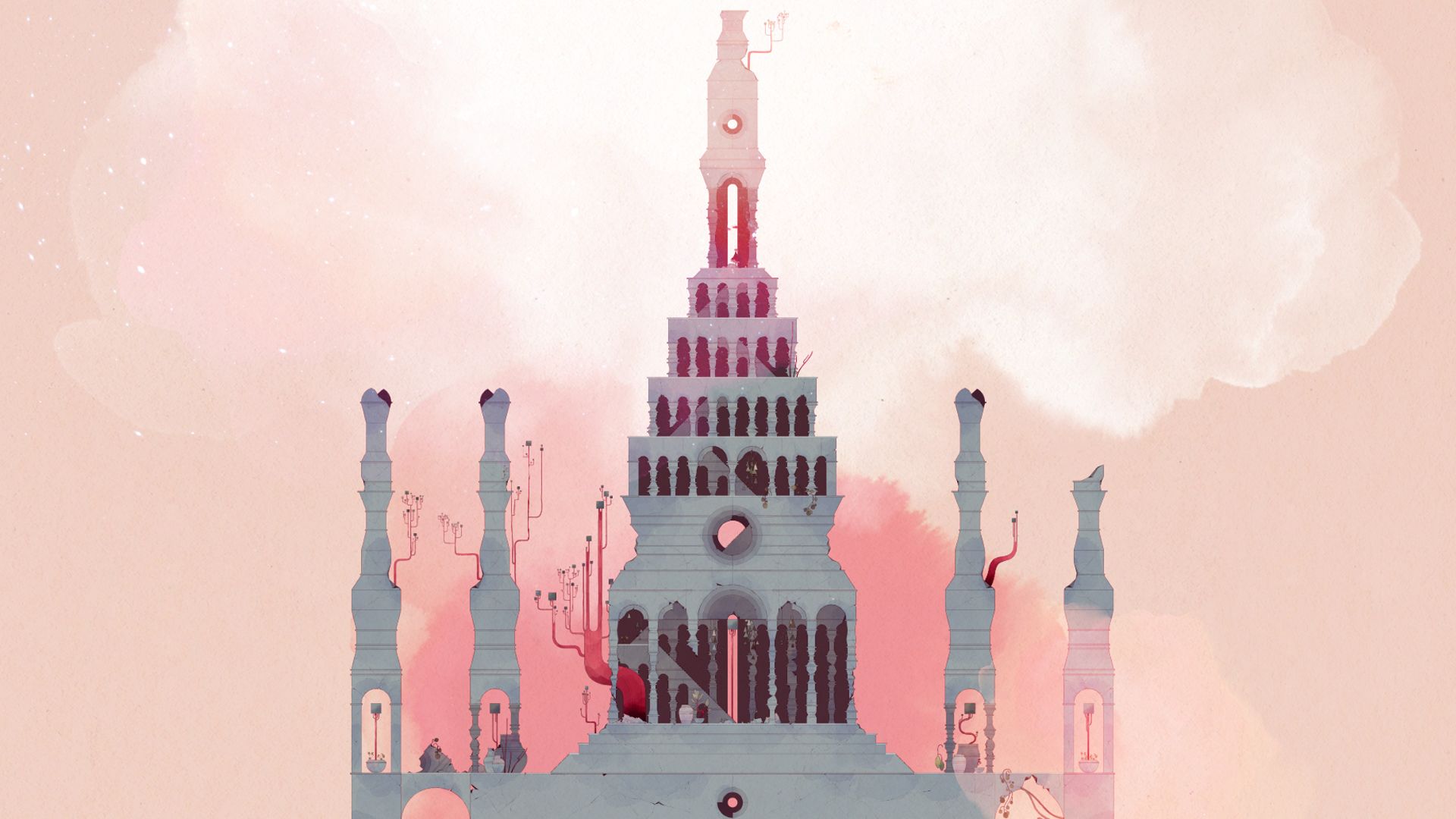
Games journalist Madison Butler explains in her 2020 Medium essay how Gris manifests this idea of grief becoming a permanent part of us even as we progress through the healing journey. As Butler explains, having a central “temple” that the player returns to multiple times throughout the game helps to ground the player and give them a comforting sense of familiarity. But even as color and light return to the world through the player’s actions, the cracks in the temple’s stone remain:
“At first, the temple is the same broken gray as everything else. Once Gris goes through a stage of grief (represented by the environment regaining its colors one by one), the temple becomes livelier. Cool blue water pools at its base, yellow lights give the stone an inviting luminance, and flowers burst into colorful pink bloom when Gris sings. One detail I both appreciated and found interesting is that the temple itself remains the same throughout. The light and flowers, for all their beauty, don’t hide the temple’s flaws, the cracks and scars in the stone that will surely remain long after Gris has healed.
This is one of the things I liked most about Gris, the reminder that grief is not a journey from which you’ll return unscathed. All of our experiences, good and bad, shape us: our perceptions and relationships with ourselves. In Gris, this is represented by the temple, which retains elements from each section of the game.”
The temple is a perfect example of the “ludonarrative harmony” which Butler argues is a constant theme throughout Gris. The moment-to-moment gameplay gives players immediate problems to solve and challenges to overcome, but it also clearly communicates the narrative growth the protagonist is going through. Over time, the protagonist gains new abilities, restores color to the world around her, and brings liveliness back to the temple’s surroundings. Some things may never be fully restored, but that doesn’t mean we can’t regain our lost sense of safety and happiness when we put in the work to heal.
What We Leave Behind
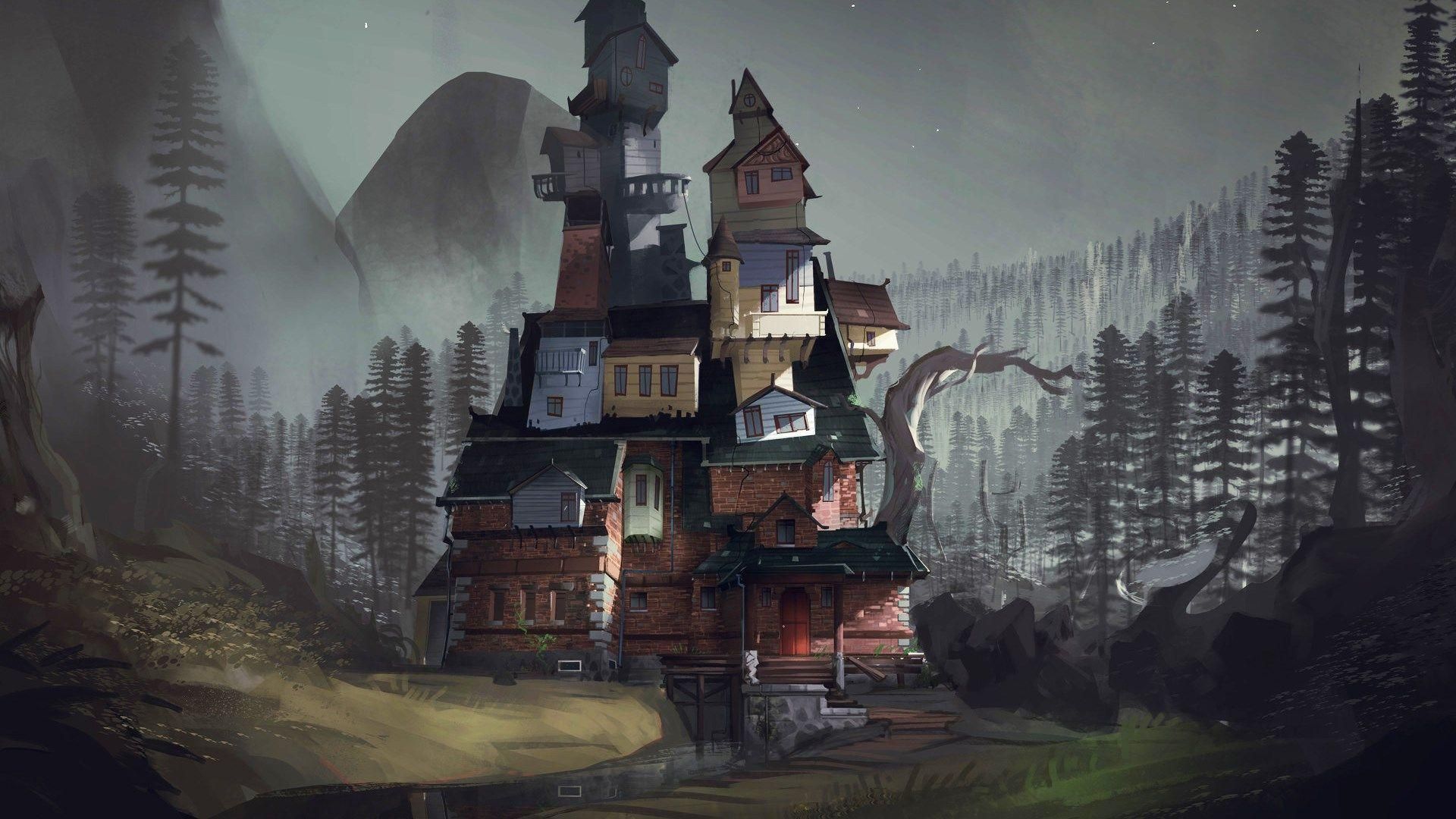
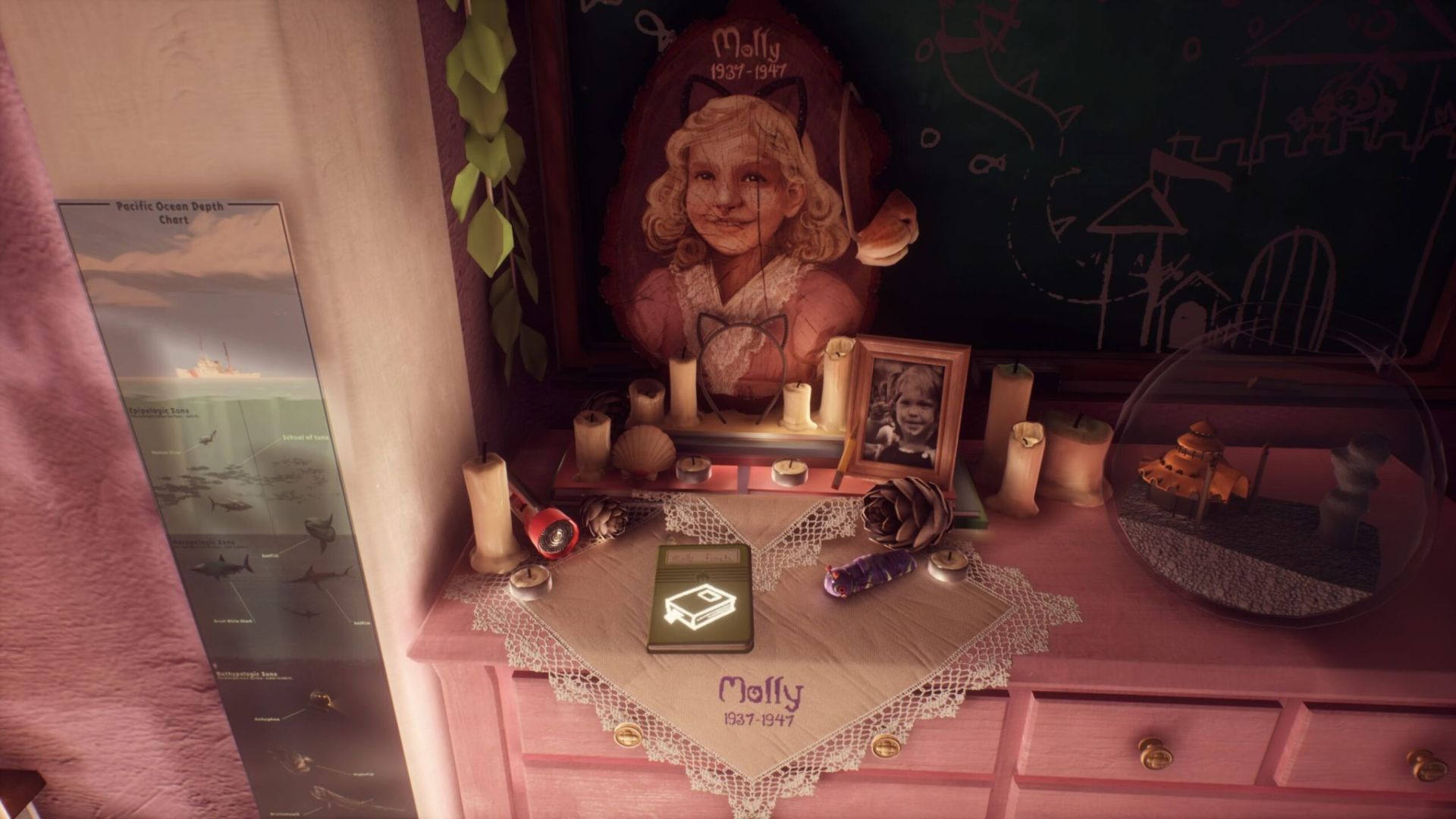
At the start of What Remains of Edith Finch, Edith is a young seventeen-year-old woman caught between two worlds. She returns to the empty and abandoned family home she and her mother Dawn fled from seven years earlier, determined to find clarity on the questions her mother refused to answer. What she finds instead is a massive shrine to the many Finch family members who came before her, all of whom are now dead but all of whom also have their own stories to tell.
Narration provided by Edith as players guide her around the house reveals that her great grandmother, who was also named Edith but who everyone called ‘Edie,’ and her mother had polarizing opinions on how to handle the overwhelming number of deaths in their family. Dawn was convinced that the deaths were part of a curse that she and Edith needed to escape and get as far away from as possible. Edie, however, saw each family member’s death as a way to preserve their story.
Each family member had their own bedroom within the massive house, and when they died, Edie would turn their room into a sort of shrine, preserving their memory and allowing them to become what she saw as a sort of family legend. Dawn, in her efforts to protect Edith from what she interpreted as Edie’s misguided and dangerous mythmaking, sealed the rooms off with boards, nails, and foam. Gameplay in Edith Finch involves the discovery of secret passages which allow Edith to access these sealed rooms and bear witness to each family members’ final moments (played out in short interactive vignettes which utilize unique gameplay mechanics and dreamlike perspectives).
As writer Kecheng Zhu explains in their own 2025 Medium essay, this dichotomy on how Dawn and Edie both handle the deaths of their loved ones ties into the game’s central message: that it’s important to sit with and understand grief if we want to ultimately move past it. During their exploration of the house, players don’t have any way to sprint or increase Edith’s walking speed (common features found in most other video games). The game wants players to take their time, to absorb the meaning behind the memories that exist not just in the bedrooms, but in the house as a whole.
From Zhu’s essay:
“This is where the walking part of the game really matters. It forces you to slow down, to walk through grief at the same speed Edith does. It pushes back against modern culture’s impulse to rush through grief. In a world where death is often ignored unless it becomes a spectacle or a headline, Edith Finch dares to slow things down and say:
“This life mattered.”
By writing things down, retracing steps, and unlocking rooms, [Edith] begins to make sense of the legacy she’s inherited. In doing so, she creates something lasting: not just survival, but a bridge between what was lost and what might still be passed on.”
Ever Forward
Given the traumatic ways in which many of the Finch family members died (including one who drowned in a bathtub as a baby, one who committed suicide via decapitation, and one who was hit by a train), Dawn’s fear and paranoia are understandable. Similarly in Gris, the grief that the protagonist must overcome is often represented as a black, monstrous creature (such as a giant bird or a giant eel) that actively attacks and chases the protagonist. Both Gris and Edith Finch show (in their own ways) that grief can be a hard emotion to grapple with, especially when it’s coupled with the trauma of witnessing a loved one’s death.
However, both games also show (again, in their own ways) that grief, like other human emotions, isn’t meant to be permanent. Purposefully clinging to fear and to grief (like what Edith’s mother Dawn does) can provide short-term safety, but it also stymies long-term healing. Edie may let herself get lost in the whimsy and fantasy of her family members’ lives and deaths, but in a way she takes the healthier approach of appreciating what their lives meant without wallowing in the pain of their absence. In Gris, the protagonist moves through visual representations of the five stages of grief, ultimately regaining the voice that she lost at the start of the game.
As scary and overwhelming as it can be at times, addressing the causes of our grief, understanding them, and accepting them in our own fashion is the best way to move past it. Much like with the Dessendre family in Clair Obscure: Expedition 33, it helps to realize that we can still come back from even the deepest, darkest grief if we have a strong support network and the willingness to face it head on. Addressing grief may not always be as straightforward as progressing through a video game with a clear beginning and end, but as any domestic survivor will tell you, the journey is often just as meaningful as the destination.
Other Recommended Games that Explore the Concept of Grief
If you’d like to see other ways in which grief has been explored through the medium of video games, please check out the following games:
-That Dragon, Cancer
-Firewatch
-Brothers: A Tale of Two Sons
